Career Breaks

How Career Breaks Add Value to Every Organisation

Creating a healthy, supportive workplace is essential to the success of every organisation. When employees feel valued, listened to, and given the opportunity to maintain a healthy work–life balance, they are more likely to be engaged, motivated, and committed to their roles.

Effective leaders understand that investing in employee wellbeing delivers benefits that extend far beyond the bottom line. Supporting people through initiatives such as career breaks, wellbeing programmes, and meaningful recognition helps build a positive workplace culture, strengthens employee retention, and encourages long-term performance.

By recognising the early signs of stress or burnout and working together to find practical solutions, organisations can create an environment where employees feel supported before challenges begin to affect their wellbeing, their colleagues, or the wider business.

Option A

Career Breaks Help Create a Healthy, Balanced Workplace

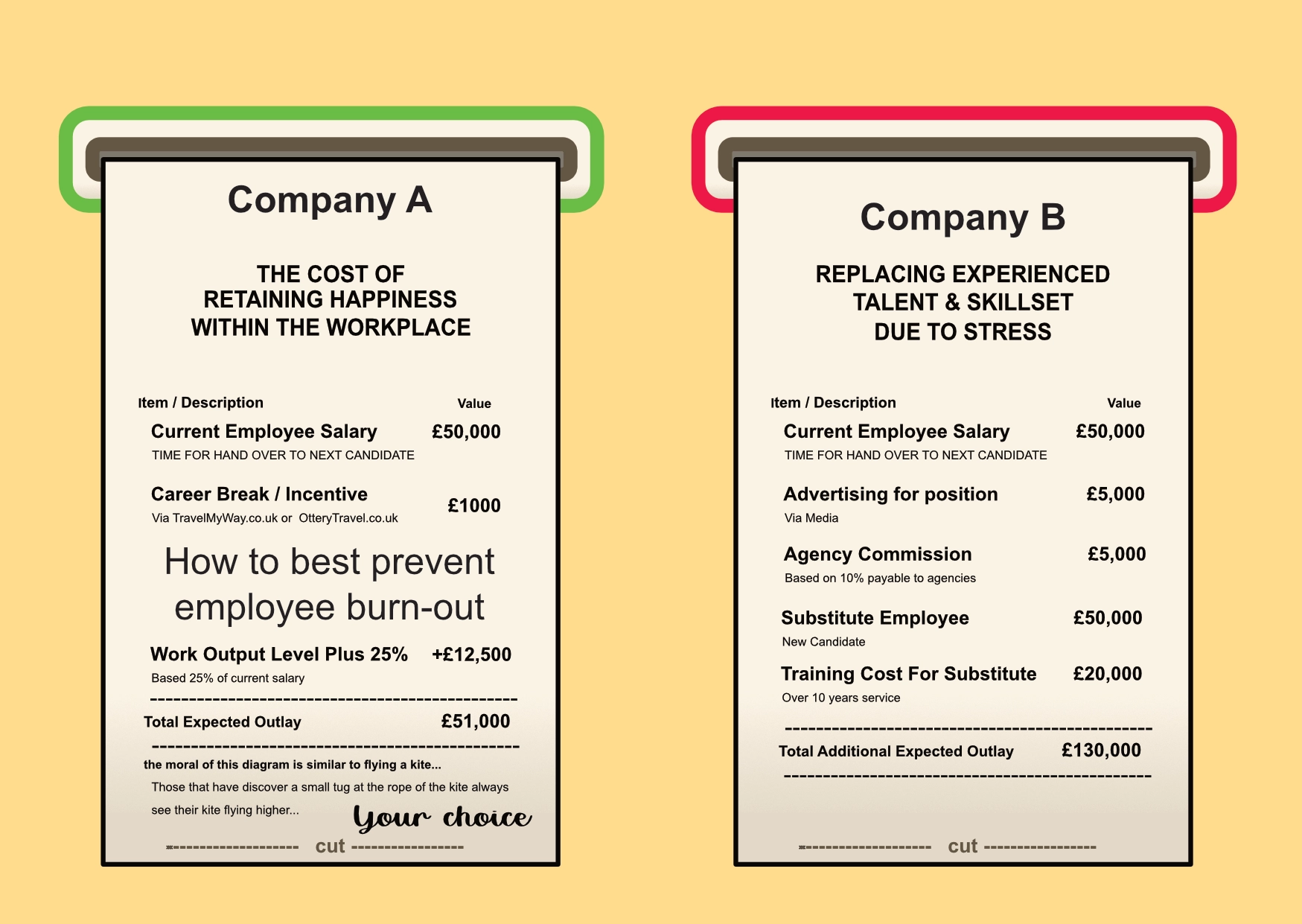
The diagram above illustrates how career breaks can support employee wellbeing by reducing the risk of burnout while also contributing to stronger business performance. When employees have the opportunity to rest, recharge, and regain perspective, they often return feeling more engaged, motivated, and productive. This forms a constructive way of benefiting both the individual and the organisation.


Encouragement and a Positive Workplace

When employees choose to leave an organisation, there are often underlying reasons that deserve understanding rather than assumption. These may include unmanageable workloads, ongoing workplace pressures, limited opportunities for career development, or simply feeling that they have reached a plateau in their role.

Taking the time to listen and explore these concerns can help employers create a more supportive and positive working environment. In some situations, a career break or other wellbeing initiatives may be part of the solution. You may also find it helpful to refer to our section on employee incentive travel for additional ways to recognise, motivate, and retain your team.


Time for Yourself

Having dedicated time for yourself is not a luxury. It is however, an important part of maintaining good physical and mental wellbeing. Stepping away from the demands of work can provide the space needed to rest, reflect, and return with renewed energy and focus.

It is often said that if doctors could prescribe a holiday, they would. While time away is not the answer to every challenge, taking a meaningful break can make a significant difference.

One of the best ways to understand whether someone would benefit from additional support is through a relaxed one-to-one conversation. These discussions provide a safe opportunity to talk openly about wellbeing, workload, and future aspirations. Every one-to-one conversation is treated with complete privacy and confidentiality.

Option B

Don’t Let Your Organisation Reach This Point

Mental health challenges can affect anyone, at any stage of life. They may arise from a combination of personal, workplace, or external circumstances, and every individual’s experience is unique.

For organisations, failing to recognise and support employee wellbeing can have a significant impact. Increased absence, reduced engagement, lower productivity, and higher staff turnover can all affect teams, organisational culture, and ultimately business performance. More importantly, it can affect the health and wellbeing of the people who make your organisation what it is.

A Mental Health First Aider plays an important role by providing a safe, supportive, and confidential space to listen without judgement. They are not there to diagnose or provide counselling, but to offer reassurance, signpost individuals to appropriate sources of help, and provide information about organisations and services that specialise in supporting a wide range of mental health and wellbeing needs.

Our organisation has listed below a variety of employee concerns. We’re here in helping individuals access the right help at the right time.


A helpful and invaluable resource at your fingertips.

Employee issues may include: Abuse, Advice & Support, Advocacy, Anxiety, Armed Forces, Bereavement, Bipolar, Blind and Sight Loss, Carer and Family Support, Crisis Care and Support, Deaf and Hearing Loss, Dementia, Depression, Disability, Eating Disorder, Epilepsy Friendly, Ethnic Support, Financial Support, Frontline Staff, Gambling Addiction, Health Related Support, Hearing Voices, Homelessness, LGBT+ Support, Loneliness, Menopause, Men’s Support, Neurodivergence, OCD, Older People’s Support, Panic Attacks, Parinatel Support, Physical Activity and Movement, Prison and Probation Friendly, Pycohosis, Rural and Agricultural Support, Schizophrenia, Self-Harm, Student Support, Substance Misuse, Therapy, Trauma, Urgent 24/7 Crisis Support, Women’s Support, Young Persons Support

Don’t hesitate to contact our office should you wish to offer our service internally at your office.

Individuals are key to any organisational growth.